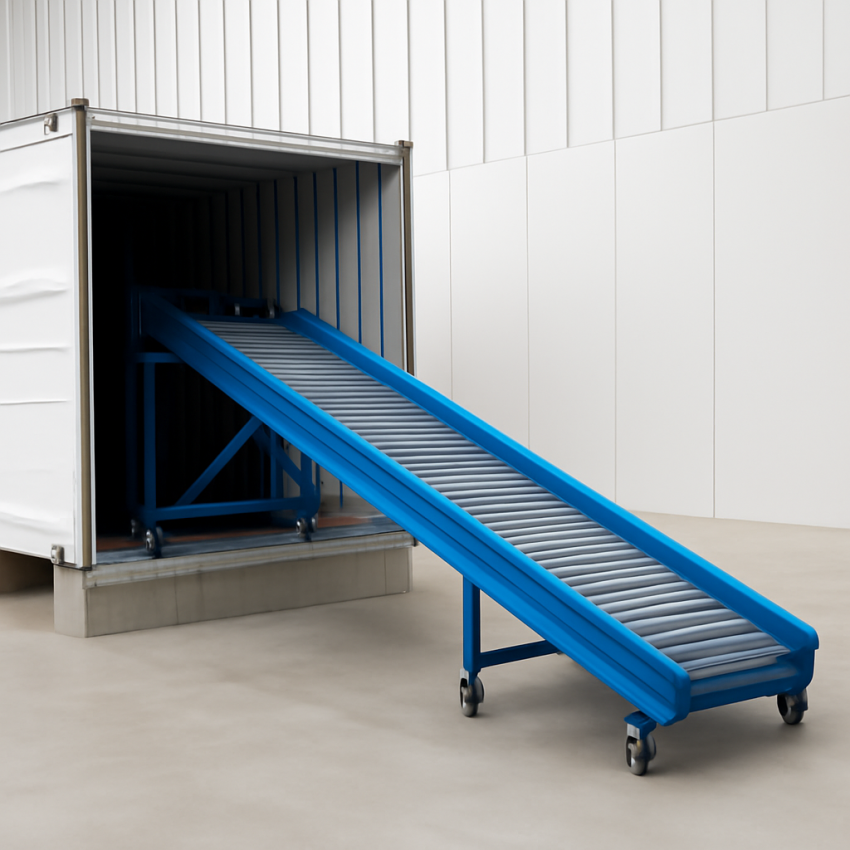
A busy dock can make or break the pace of an entire supply chain. When trailers queue up and labor teams struggle to keep up, delays ripple from receiving to putaway, picking, and last-mile dispatch. That is where a truck unloader conveyor turns bottlenecks into predictable flow. Purpose-built to bridge the gap between the trailer and the facility’s conveyor network, these systems cut dwell time, protect workers from strenuous lifting, and provide reliable, data-rich throughput hour after hour. From express parcel hubs and cross-border operations to industrial plants and retail distribution centers, the right solution transforms manual chaos into synchronized, automated motion.
Today’s leaders in logistics equipment engineering have spent years optimizing structural design, drive technology, controls, and safety features to withstand tough, fast-paced operations. Whether the task involves cartons, totes, sacks, or mixed freight, a well-matched unloader reduces touches and raises productivity without sacrificing ergonomics or safety. In high-growth regions such as South China’s manufacturing and logistics corridors, these solutions have become standard for express delivery and warehousing facilities intent on scaling capacity with predictable ROI.
What Is a Truck Unloader Conveyor and Why It Changes the Game
A truck unloader conveyor is a mobile or fixed conveyor system designed to enter or align with the rear of a trailer, capturing inbound goods at the point of arrival and transferring them directly into a facility’s handling flow. Instead of relying on teams to form human chains or push heavy carts down ramps, operators position the conveyor’s boom or flexible segments to the ideal working height and depth inside the trailer. Packages ride the belt or rollers out of the vehicle and onto downstream conveyors or sortation lines, dramatically compressing the unload cycle.
Several architectures are common. Telescopic belt conveyors extend multiple sections into the trailer, bringing powered conveyance to the load. Flexible or accordion-style conveyors offer maneuverability around tight dock spaces and variable trailer layouts. Gravity roller systems can complement powered sections to create multi-stage flows. Portable mobile units add wheels and powered drives so one system can serve several doors. Each design aims to create a smooth path from trailer floor to facility conveyor with minimal gaps and ergonomic positioning that protects workers’ backs, shoulders, and wrists.
The performance gains are immediate and measurable. Facilities typically see shorter unload times per trailer, fewer labor hours per thousand cartons, and lower damage rates thanks to gentler handling. Safety improves through lockable casters, guarded pinch points, emergency-stop circuits, soft-start drives, and photoelectric sensors that prevent back-ups. Digital features add another layer of advantage: variable frequency drives fine-tune speed, human-machine interface panels store recipes for different SKUs or parcel mixes, and industrial communications allow the system to share upstream capacity signals with scanners, weigh scales, or sortation controls. For high-volume networks, the impact compounds. Throughput predictability enables more accurate dock scheduling, better labor planning, and tighter linehaul cutoffs that keep promises to downstream customers.
As e-commerce and cross-border logistics continue their rapid growth, the truck unloader conveyor has become a cornerstone technology in the receiving area. It is no longer just a helpful tool; it is a strategic lever that directly influences order cycle time, fulfillment accuracy, and the overall resilience of the supply chain. For facilities modernizing in phases, a well-chosen unloader can be the first automation step that pays for itself quickly and paves the runway for future integration.
Core Features, Specifications, and Smart Selection Criteria
Choosing the right system begins with a clear picture of the product mix and daily volume profile. Capacity matters on two levels: static load ratings for structure and dynamic throughput for cartons per hour. Consider belt width and roller diameter versus the smallest and largest package sizes you handle; this prevents gaps, wedging, or unstable transitions. Telescopic reach, number of boom sections, and maximum extension determine how deeply the unit can enter typical trailers and containers. Height adjustability, via hydraulic or electric actuators, supports ergonomic hand-off points for operators working near the nose of the trailer or at varying dock heights.
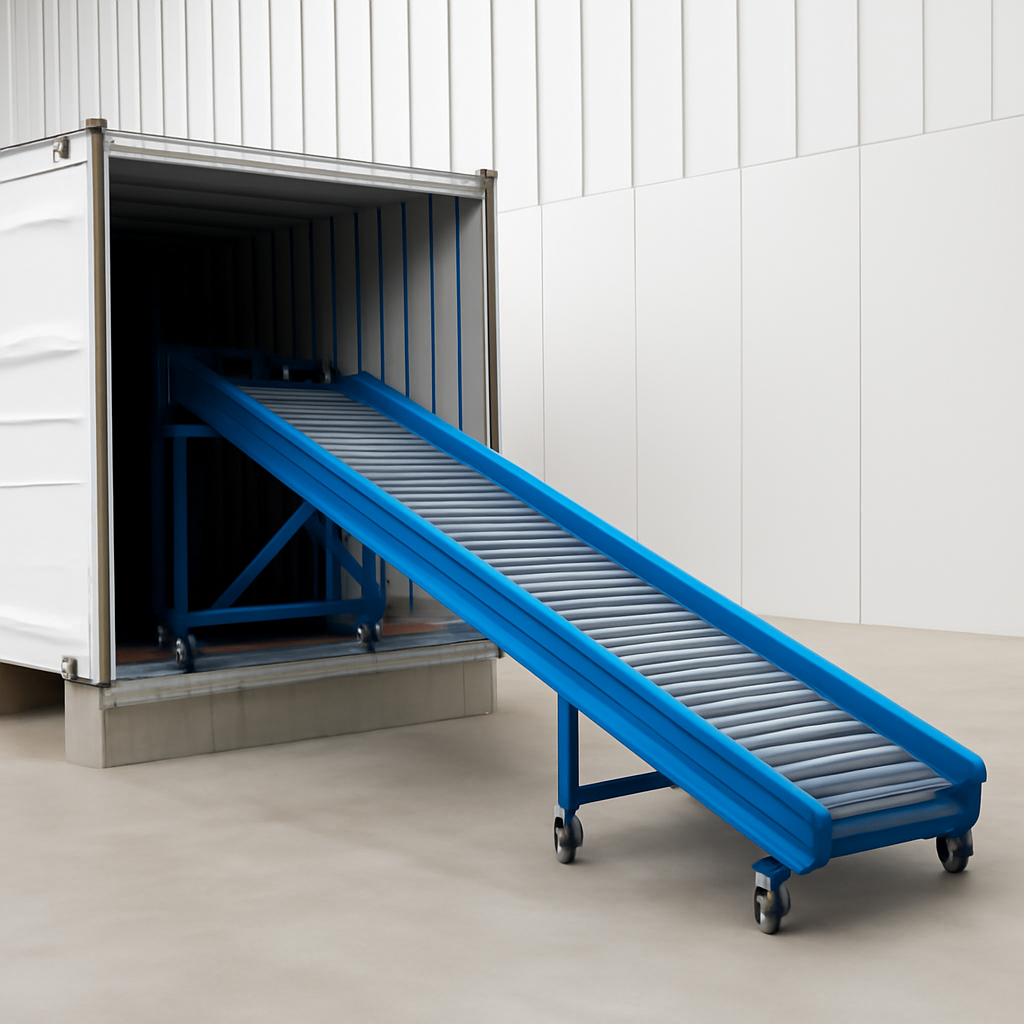
Mobility and footprint are equally important. A mobile unloader serves multiple doors and adapts to seasonal peaks, while fixed dock units excel in ultra-high-volume lanes. Power options range from three-phase mains to energy-optimized drives; look for soft-start capabilities to reduce belt wear and electrical spikes. Smart controls—VFD speed control, HMI presets, auto-retract at shift end, and PLC connectivity—elevate flexibility. In operations where scanning and dimensioning are critical, leave room (physically and electronically) for integrated devices so you can capture weight, barcodes, or dimensions right at unload without extra touches.
Safety and compliance sit at the top of the checklist. Emergency stops on both sides, bumpers, anti-collision sensors at the boom tip, guarded nip points, and audible/visual alarms are standard in best-in-class designs. For facilities with strict environmental or dust requirements, pay attention to ingress protection ratings and material finishes. Noise reduction measures protect hearing in dense dock environments. A well-engineered truck unloader conveyor also considers maintainability: removable guarding, tool-less belt tensioning, standardized bearings and rollers, and easy-access panels keep downtime short and predictable.
Total cost of ownership extends beyond purchase price. Durable frames, wear-resistant belts, and proven drives reduce life-cycle costs. Availability of local spare parts and responsive technical support can be decisive, especially in high-throughput nodes where every minute counts. Deployment speed matters as well; pre-engineered modules can accelerate installation and commissioning during tight facility remodels. Finally, verify interoperability: the unloader should hand off perfectly to your existing conveyor lines, WMS-directed putaway processes, and yard management timing. To explore configurable options aligned with express, warehousing, and cross-border operations, see the truck unloader conveyor solutions purpose-built for high-throughput docks.
Real-World Scenarios, Deployment Playbook, and a South China Case Insight
In express parcel hubs handling thousands of parcels per hour, the main pain point is not just speed but consistency. Fluctuating trailer arrivals, diverse package dimensions, and labor fatigue can create unpredictable spikes. A truck unloader conveyor stabilizes that first touchpoint by delivering a steady stream from trailer to sorter in sync with real-time system capacity. In cross-border logistics, containers of mixed cartons and sacks benefit from extendable booms and powered belts that pull loads out gently, reducing damage to fragile goods and speeding customs inspections. Retail DCs receiving vendor-packed cartons use flexible sections to adapt to varying trailer widths and to route product to quality control or direct-to-putaway lanes without manual rehandling.
Industrial and manufacturing sites apply unloaders to handle components, bulk bags, or crated parts. Here, structural robustness, wider belts, and tailored infeed chutes prevent spillage and protect part surfaces. Seasonal operations—think holiday peaks or promotional events—depend on mobile unloaders that roll from door to door, maximizing capital utilization. In dense urban and port-adjacent regions like the Pearl River Delta, where floor space is at a premium, compact footprints and tight turning radii allow systems to coexist with forklifts and pallet staging without compromising safety.
A practical deployment playbook starts with a dock-and-trailer audit: map typical trailer lengths, door offsets, and approach angles. Quantify throughput targets per lane and per shift, including peak-hour surges. Conduct time-and-motion studies to set baseline unload times and injury incident rates. Use this data to size belt width, boom reach, and speed ranges. Then address integration points: confirm transition heights to existing conveyors, scanner placements, and guardrail coverage to prevent package rollover. Train teams on safe approach, E-stop locations, and best-practice trailer sequencing. Establish KPIs—unload minutes per trailer, parcels per labor-hour, and damage-per-thousand—to track post-installation gains and guide continuous improvement.
Consider a recent example from a fast-growing e-commerce operator in South China. The facility faced erratic dock turn times during evening peaks, with trailers waiting for bays and crews rotating due to fatigue. After implementing a set of extendable truck unloader conveyor units integrated with handheld scanning and dimensioning, unload times per 53-foot equivalent dropped by over 30%. Labor productivity rose double digits as teams transitioned from heavy manual handling to flow supervision. Damage rates declined, attributed to controlled acceleration and uniform handoff to downstream lines. Just as important, the new predictability allowed tighter linehaul dispatch planning, reducing missed cutoffs to regional sort centers. The operator later expanded the system by adding a mobile unit for overflow doors, leveraging the same controls architecture for simplified maintenance and training.
This kind of performance lift is not unusual when engineering, controls, and ergonomics align. With robust R&D behind modern designs, facilities can deploy solutions tailored to express, warehousing, and industrial use cases—each focused on safer work, faster turns, and reliable data capture. The result is a receiving operation that scales gracefully as volume grows, preserving service levels without overextending labor or floor space.

Istanbul-born, Berlin-based polyglot (Turkish, German, Japanese) with a background in aerospace engineering. Aysel writes with equal zeal about space tourism, slow fashion, and Anatolian cuisine. Off duty, she’s building a DIY telescope and crocheting plush black holes for friends’ kids.